Business travel expense management is how a company gets a handle on the money its employees spend on the road. It’s far more than just stuffing receipts into an envelope; it's the whole system for planning, tracking, and making sure every dollar spent on flights, hotels, and rides delivers a real return on investment.
The New Era Of Corporate Travel Management
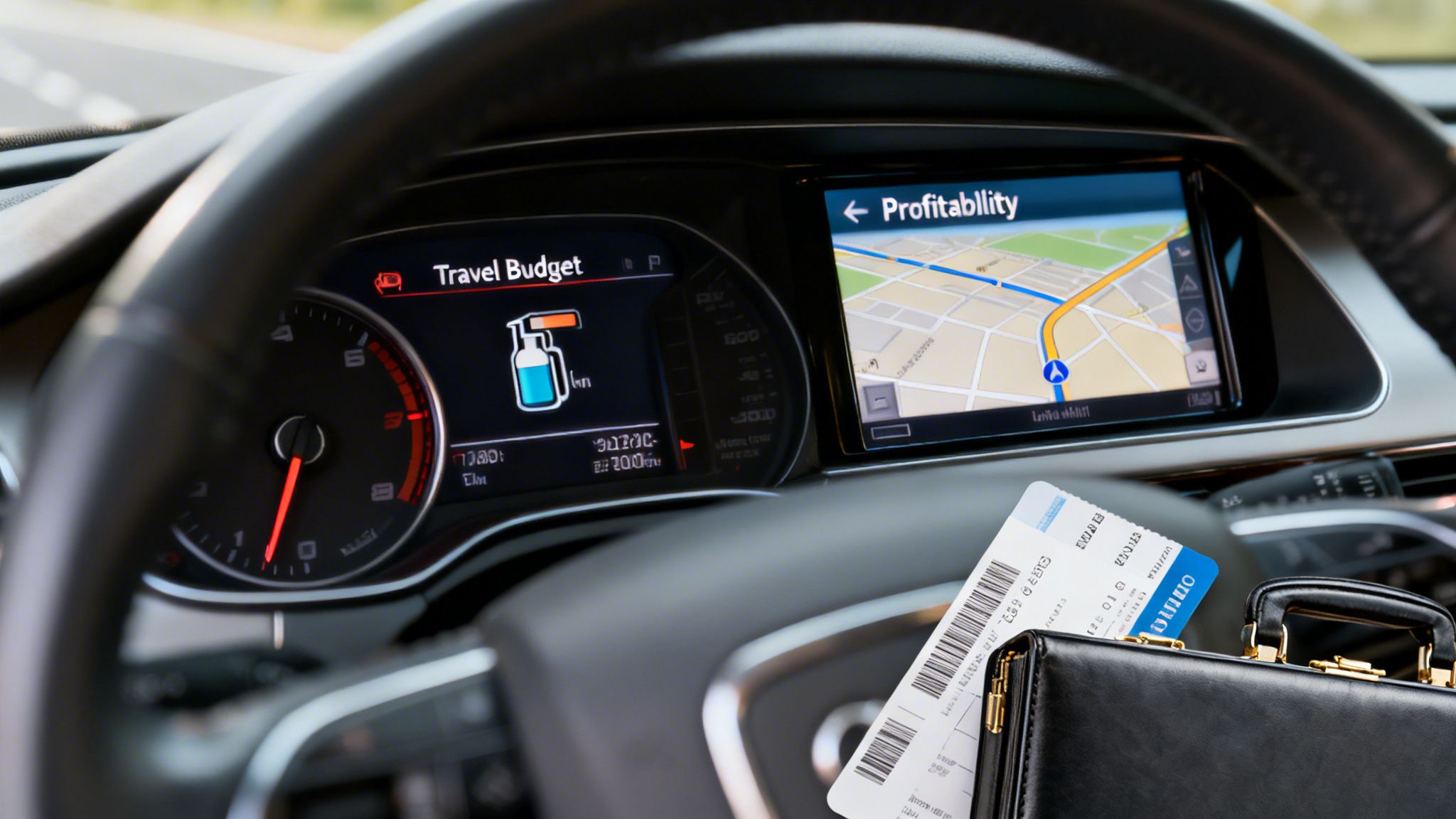
Think of your travel budget as the fuel for a cross-country road trip. A smart expense management strategy is your GPS, guiding you to your destination—profitability—along the most efficient route. It’s all about adopting a modern approach to managing travel expenses for modern professionals by using the right technology and proven best practices.
This isn’t just about slashing costs, either. The real trick is finding that sweet spot between keeping your traveling team happy and productive while also maintaining tight budget control. The old days of chasing down paper receipts after a trip are long gone. Today, effective management is a proactive, data-driven discipline.
Shifting From Reactive To Proactive
We're seeing a massive shift in how companies handle this. They are finally moving away from clunky, manual processes that are slow and full of errors. Instead, they're embracing automated systems that give them a real-time view of what's being spent.
This change allows travel managers to make sharp, informed decisions that have a direct impact on the bottom line.
A well-designed expense management program does more than just control spending; it becomes a strategic enabler of business growth. By optimizing travel investments, companies can fund more client visits, attend more industry events, and ultimately, drive more revenue.
The Importance Of Ground Transportation
A huge chunk of any travel budget—and one that’s often overlooked—goes to ground transportation. This single category is a goldmine for potential savings and efficiency gains. Nailing this part of your spending is critical, especially for anyone managing travel in competitive markets like Southern California.
Partnering with reliable, predictable transportation providers is key. For example, using a professional chauffeured service with flat rates for airport transfers to hubs like LAX or SAN completely removes the risk of surge pricing you get with rideshare apps. What was once a variable, unpredictable cost becomes a fixed, budgetable line item.
By exploring your options for corporate travel excellence, you can find partners who are truly aligned with your financial goals. It’s a strategic move that helps ensure every travel dollar is an investment, not just an expense.
What Is Business Travel Expense Management
Let's get one thing straight: business travel expense management isn't just about collecting receipts. It’s the entire framework your company uses to manage the money spent when employees are on the road.
Think of it like an orchestra. A great travel manager acts as the conductor, guiding all the different pieces—your travelers, policies, booking tools, and vendors—to work together. When everything is in sync, you get a seamless process that saves money and keeps your team productive. When it’s not, you’re left with a mess of overspending, frustrated employees, and an administrative nightmare.
The Three Pillars Of Expense Management
The easiest way to wrap your head around this is by breaking it down into three core components. We call them the three pillars: Policy, Process, and People. If any one of these pillars is weak, the whole structure becomes unstable.
A solid expense management system rests on these three pillars working in harmony. Each one plays a distinct but interconnected role in creating a program that is both cost-effective for the company and fair to the employee.
| Pillar | Analogy | Core Function | Key Outcome |
|---|---|---|---|
| Policy | The Sheet Music | Establishes the non-negotiable rules for all travel-related spending. | Clarity, consistency, and legal compliance. |
| Process | The Performance | Defines the step-by-step workflow from trip approval to final reimbursement. | Efficiency, speed, and minimal friction. |
| People | The Musicians | Involves training travelers on rules and tools, and managers on approvals. | High adoption and accountability. |
Getting this right is more critical than ever. We're seeing global business travel spending projected to soar to a record $1.57 trillion. In North America, spending has already hit 114% of what it was before the pandemic. A huge slice of that pie—a staggering $165 billion—is spent on ground transportation alone, making it a perfect area to look for savings.
Effective business travel expense management is not about restricting business; it's about enabling it. The goal is to create a system that empowers employees to travel and achieve their objectives while providing the company with the visibility and control needed to manage costs wisely.
Building A Cohesive Program
Ultimately, your success hinges on getting all these elements to work together as one cohesive unit. This means you need buy-in from everyone involved, from the C-suite who sets the budget all the way down to the individual traveler booking a car.
When your policy is clear, your process runs smoothly, and your people are on board, you shift from simply reacting to expenses to proactively managing a strategic part of your business. This mindset applies to every detail, including how your team gets from the airport to their meeting. Looking into options like professional executive transportation services can be a smart move, offering predictable costs and a much higher standard of reliability and service.
How To Design A Bulletproof Travel Expense Policy
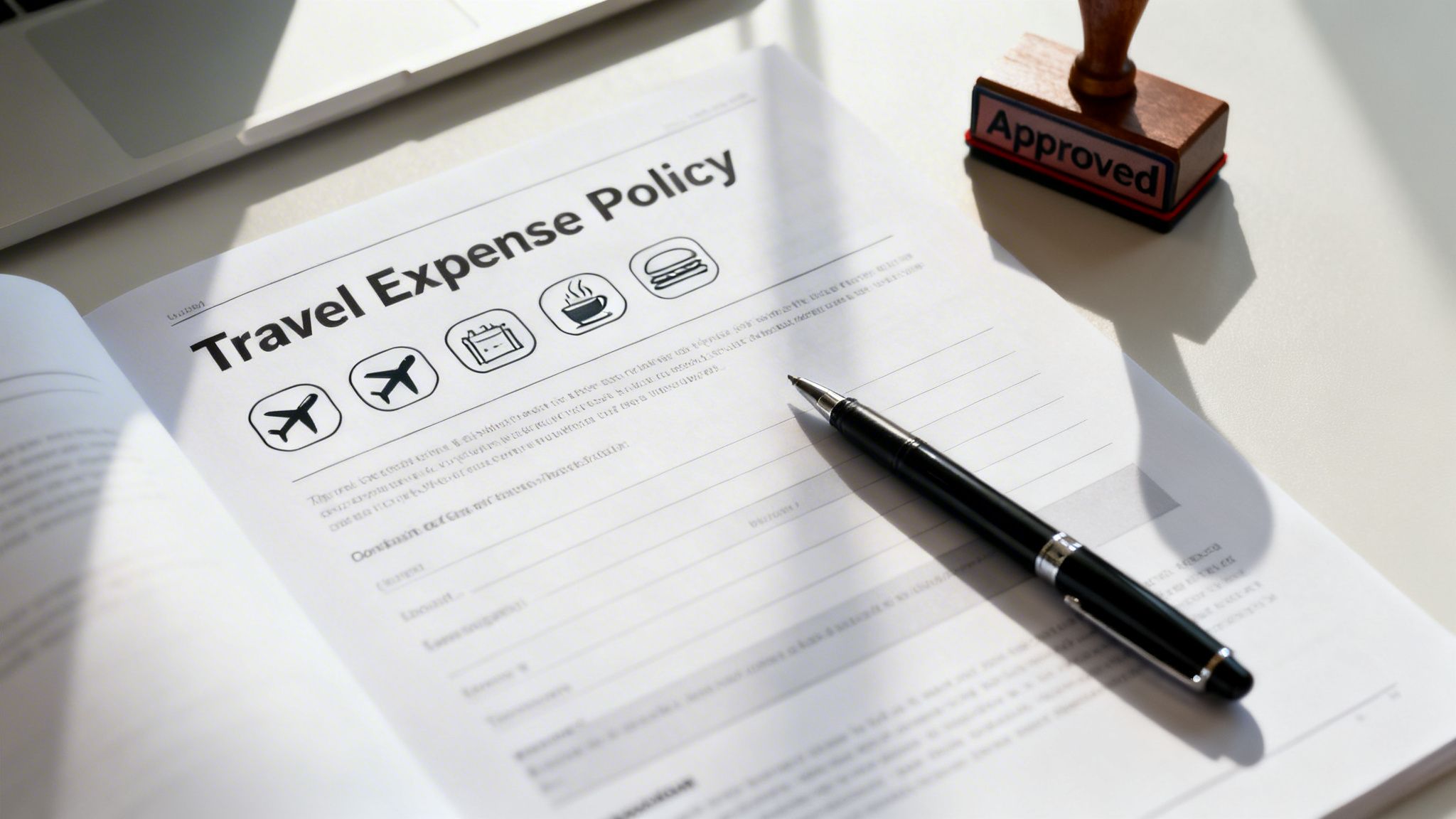
Think of your travel expense policy as the rulebook for your entire corporate travel program. It’s not just about setting spending limits; it’s a strategic document that balances giving your employees a smooth travel experience with protecting the company’s bottom line. A well-written policy is the absolute bedrock of a successful program.
Without one, you're essentially operating on guesswork. Your employees are left wondering what’s okay to book, and your finance team ends up spending half their time chasing down questionable receipts. A clear policy eliminates that ambiguity and sets firm, fair expectations for everyone involved.
It’s like the guardrails on a highway. The policy doesn't stop travel, but it keeps everyone safely in their lane, moving efficiently toward the same destination. It empowers employees to make smart decisions on the road while protecting the company from runaway costs and compliance headaches.
Core Components Of An Effective Policy
A truly effective policy leaves no room for creative interpretation. It needs to be a comprehensive guide that walks an employee through every step of a trip, from the moment they think about booking a flight to when they submit their final expense report.
Here are the non-negotiables your policy must cover:
Booking Procedures: Spell out exactly how and when employees need to book their travel. Do they have to go through your company’s designated travel management company (TMC) or online booking tool? Can they book on their own? Be specific about lead times, like requiring flights to be booked at least 14 days in advance to avoid last-minute price hikes.
Expense Categories and Limits: Break down every single reimbursable expense category—flights, hotels, meals, ground transportation, you name it. For each one, set clear spending caps. This could be a maximum nightly hotel rate that varies by city or a simple daily limit for meals.
Non-Reimbursable Expenses: Be brutally honest about what the company will not pay for. Things like mini-bar raids, in-room movie rentals, gym passes, or parking tickets should be on this list. Spelling it out upfront saves everyone from having an awkward conversation later on.
Per Diems Versus Actuals
One of the biggest forks in the road when designing a policy is deciding how to handle meals and incidental expenses. Do you go with a per diem or reimburse for actual spending?
A per diem gives travelers a flat-rate daily allowance. It's simple for everyone—finance doesn't have to audit a mountain of food receipts, and travelers have flexibility. The downside? Employees might underspend and pocket the difference, or the rate might not be enough for an expensive city.
Reimbursing for actuals means the employee gets paid back for exactly what they spent, backed by receipts. It’s perfectly accurate but creates a ton of administrative work. Many companies find a happy medium with a hybrid model: reimbursing actual expenses up to a daily cap.
Crafting Smart Ground Transportation Rules
Ground transportation is one of those categories where a vague policy can lead to costs spiraling out of control. Your policy has to give clear, practical guidance on what kind of ride to use and when.
A strong policy anticipates travel scenarios and provides a clear path forward. For ground transportation, this means defining the use case for each option—from cost-effective rideshares for solo trips to premium black car services for C-suite travel or client-facing engagements.
For example, your policy can state that a standard rideshare is the default for a solo employee moving between the hotel and a local office. But it should also define when a professional black car service isn't just an option but the preferred choice.
Justified reasons for using a premium car service often include:
- Executive Travel: Ensuring senior leaders can travel safely and work productively on the go.
- Client Transportation: You get one chance to make a first impression when picking up a VIP client.
- Tight Airport Connections: Guaranteeing a punctual, reliable ride is critical for can’t-miss-it transfers at busy hubs like LAX or SAN.
- Group Movements: It's far more efficient (and often cheaper) to book one Sprinter van than to coordinate a fleet of separate rideshares.
The trick is to tie the transportation choice to a clear business need. If you're building out your preferred vendor list in Southern California, our guide on how to find the best car service in San Diego without breaking the bank offers some great, practical tips.
Finally, remember that your policy isn't set in stone. It’s a living document. Costs, travel patterns, and company priorities all change over time. Make a point to review and update it at least once a year to keep it relevant and effective.
Using Automation and Tech to Simplify Expense Workflows
Let's be honest: manual expense reports are a major headache. Your employees waste precious hours chasing down receipts and punching numbers into spreadsheets, while your finance team gets buried under a mountain of paperwork just to approve it all. True business travel expense management is about leaving that outdated process behind and using technology to give everyone their time back.
Think of it this way: managing expenses manually is like trying to find your way through a new city with a tattered paper map. You'll probably get there, but it's slow, full of wrong turns, and deeply frustrating. Automation is your GPS—it shows you the fastest route, warns you about problems in real-time, and makes the whole journey smoother.
This is the core idea behind a modern expense workflow: moving from clunky manual entry to smart, automated data capture. It’s about building a better system from the ground up.
The Modern Tech Stack for Expense Management
Today’s tools give you everything you need to automate the expense process from start to finish. Instead of a series of disconnected manual tasks, you can create one seamless flow that begins even before a trip is booked. A solid tech stack usually relies on a few key pieces working in harmony.
Pre-Approval Software: This is your first line of defense against overspending. Before an employee even thinks about booking a flight, they submit a request with estimated costs. The software automatically checks this against your policy, flagging any potential issues before a single dollar is spent.
Online Booking Tools (OBTs): These platforms are hard-wired to your travel policy. When employees use the OBT to book flights or hotels, it only displays options that are compliant, guiding them toward preferred vendors and keeping them within budget. It’s like having built-in guardrails.
Expense Reporting Apps: This is where the real magic happens for your travelers. Modern apps use Optical Character Recognition (OCR) to scan and digitize receipts instantly. An employee just snaps a photo of a receipt, and the app automatically reads the vendor, date, and amount, creating an expense entry in seconds. For tools that excel at this, check out the Best Receipt Scanning Apps.
This kind of technology does more than just save time—it actively enforces your policy. If someone tries to submit a purchase from an unapproved vendor or a meal that’s over the limit, the system can flag or reject it on the spot.
Seamless Vendor and System Integrations
One of the biggest wins in modern expense management comes from connecting your systems directly with your key vendors. This creates an incredibly smooth experience for travelers and gives the company a crystal-clear view of spending.
A perfect example is setting up a direct billing account with a professional chauffeured car service. When you do this, your travelers no longer have to pay for their airport rides out of pocket. The trip is automatically charged to the company’s central account.
This simple integration unlocks some major advantages:
- No More Out-of-Pocket Spending: Your team doesn't have to front their own cash for ground transportation, which reduces financial stress and eliminates the reimbursement waiting game.
- Centralized Invoicing: You get one detailed invoice for all rides, which makes auditing and allocating costs incredibly simple.
- Better Data and Control: With all your trip data in one dashboard, you can spot spending patterns, negotiate better rates, and ensure compliance without lifting a finger.
When you integrate key travel partners like transportation providers, you turn a tedious administrative task into a strategic advantage. The burden of payment and reporting shifts from the employee to the system, freeing everyone to focus on their real jobs.
This is especially critical now. With average U.S. business flights hitting $701 in 2024, a staggering 87% of travelers report that their companies are cutting back on allowable expenses. Predictable ground transportation is no longer a luxury; it's essential. Services with flat rates and flight tracking help you avoid the surprise fees that 59% of managers are actively trying to eliminate. You can dive deeper into these trends in this comprehensive guide to business travel statistics from Engine.
Setting up a direct link with your transportation provider is straightforward. You can easily establish a corporate profile through an online reservation portal to manage employee travel and centralize all your billing. It’s a small step that pays off big in both efficiency and cost savings.
4. Getting Ground Transportation Under Control
It’s easy to overlook ground transportation when planning a business trip, but those small fares add up fast. This category can easily eat up over 12% of your total travel and expense budget, making it a prime target for any travel manager looking to get smarter with company spending.
Getting a handle on these costs is essential, especially if your team frequently travels to major hubs like SAN, LAX, or SNA. You’re not just booking a ride; you’re managing a complex set of variables from airport transfers to client dinners. To do it right, you have to look past the fare on an app and consider the total cost of each option—that includes hidden fees, lost time, and the impression you leave on clients.
Comparing Your Transportation Options
When it comes to getting around, not all rides are the same. The choice between a rideshare, a taxi, or a professional car service has real consequences for your budget, your traveler’s safety, and your company’s reputation.
Let's break down how the three main choices stack up for business travel.
For a clearer picture, it helps to compare these options side-by-side based on what really matters for business.
| Feature | Rideshare Apps | Taxis | Professional Chauffeured Service |
|---|---|---|---|
| Cost Predictability | Low. Surge pricing is common and unpredictable. | Medium. Metered, but rates can vary with traffic. | High. Flat rates can be negotiated for frequent routes. |
| Service Quality | Variable. Driver and vehicle quality can be inconsistent. | Variable. Varies by city and company. | High. Professional chauffeurs and well-maintained vehicles. |
| Availability | High in urban areas, but can be scarce elsewhere. | Inconsistent. Can be hard to find during peak times or in suburbs. | Guaranteed with advance booking. |
| Billing | Individual expensing; difficult to centralize. | Usually requires individual payment and expensing. | Centralized billing streamlines accounting. |
| Duty of Care | Varies by app; driver vetting can be minimal. | Regulated, but standards can differ. | Highest level. Vetted, insured, professional chauffeurs. |
Ultimately, while rideshares and taxis work for quick, one-off trips, a professional service is built for the demands of business, offering control and reliability where it counts.
The workflow below illustrates how a structured, automated process—for any expense, including ground transportation—is always more efficient than a manual free-for-all.
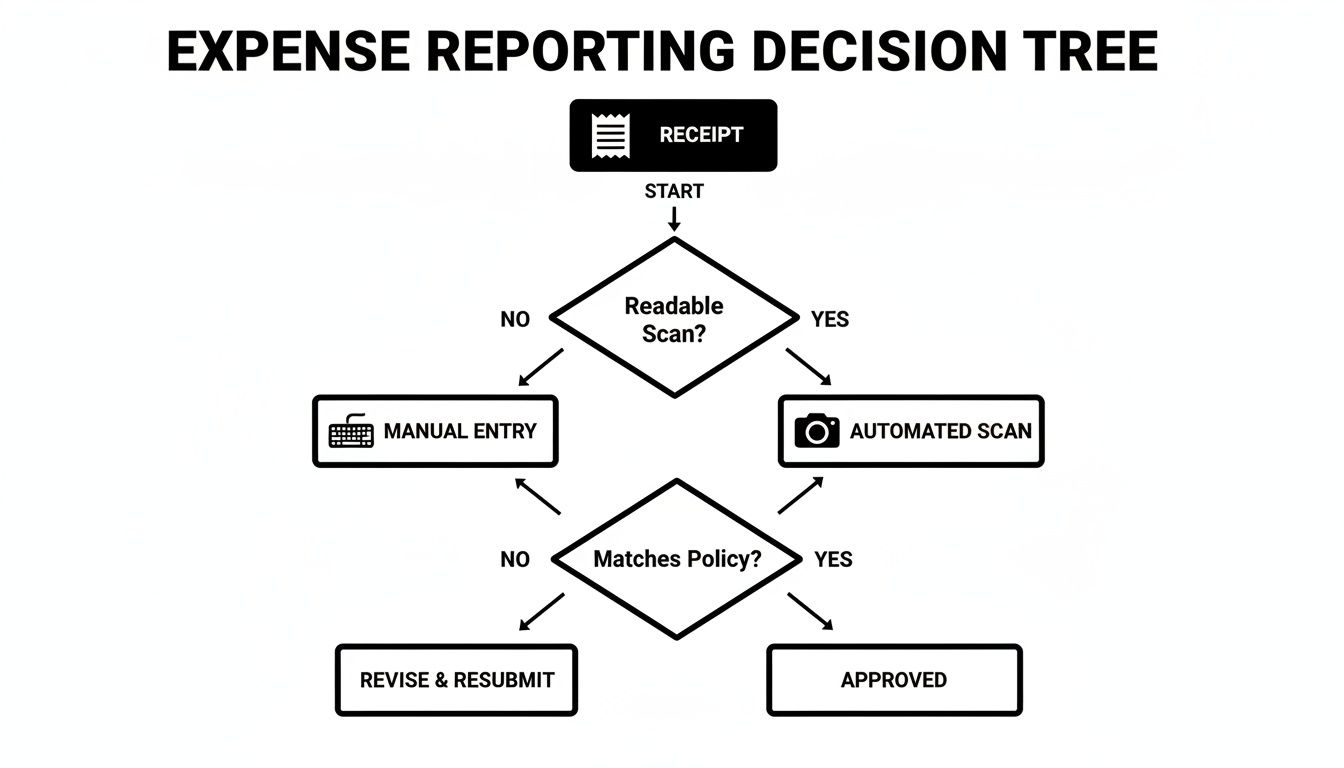
As you can see, automation removes the tedious manual steps and the risk of human error. The result is a faster, cleaner, and more accurate reimbursement cycle for everyone involved.
Smart Tactics to Cut Costs and Reduce Friction
Choosing the right type of service is just the first step. A few simple, strategic moves with your transportation provider can make a huge difference in both cost and your travelers' experience.
First, insist on a service that uses flight tracking. This is a game-changer. The dispatch system monitors your traveler’s flight in real time and automatically adjusts the pickup if there’s a delay. This simple feature eliminates expensive wait-time charges and ensures a driver is there right when your traveler lands—not an hour before.
A Meet & Greet service isn't just a perk; it's a productivity tool. Having a chauffeur waiting with a sign at baggage claim saves a traveling executive or an important client from navigating a chaotic airport like LAX. It’s a small touch that projects complete professionalism and care.
Another powerful move is to negotiate flat rates with your preferred provider for common routes. Locking in a fixed price for trips like Downtown San Diego to SAN or your Orange County office to SNA makes your budget predictable. It turns a variable expense into a fixed line item, which is the foundation of good expense management.
A Real-World Example: The LAX Scramble
Picture this: a team of six executives lands at LAX for a high-stakes investor meeting. The default plan is for everyone to just order their own rideshare. Chaos ensues.
The team immediately gets separated, arriving at the hotel at different times. They’re all subject to surge pricing, which is practically guaranteed at LAX during peak hours. The message this sends is one of disorganization—not the polished, unified front you want to project before a critical meeting.
Now, let's replay that with a smarter approach: a single, pre-booked Mercedes Sprinter van.
- Cost Control: One flat-rate booking is almost always cheaper than six separate rideshare fares hit with surge pricing.
- Efficiency: The team travels together. They can use the travel time to do a final run-through of their presentation, turning downtime into productive time.
- Professionalism: They arrive together, on time, in a single, impressive vehicle. It’s a powerful first impression that screams competence and coordination.
This one decision shows how a strategic ground transportation choice directly impacts the bottom line and business outcomes. If you want to learn more about what seasoned travelers value, check out our article on the top features business travelers look for in car services.
Measuring Your Program's Success With KPIs
If you can't measure your travel program, you can't improve it. It's that simple. A well-run business travel expense management program isn't something you set up and forget; it's a living system that needs constant fine-tuning based on real data. This is where Key Performance Indicators (KPIs) come in.
Think of it this way: flying blind with your company's travel budget is a recipe for waste. Relying on gut feelings to make spending decisions is just guesswork. KPIs are your instruments in the cockpit—they turn a mountain of raw expense data into clear, actionable signals about the health of your program.
These metrics show you what’s working, what's not, and exactly where you can step in to make a difference. With the right data, you can spot opportunities to cut costs, make travel smoother for your team, and demonstrate the program's real value to leadership.
Key Metrics to Track
A truly insightful travel dashboard tells a story that goes far beyond a single "total spend" figure. To get the full picture, you need a balanced set of metrics covering costs, policy compliance, and the traveler's experience.
Here are the essential KPIs I always recommend focusing on first:
- Average Cost Per Trip: This is your fundamental baseline. It lets you see how spending is trending over time, but its real power comes when you segment it by team, destination, or trip purpose to find out where the money is really going.
- Policy Compliance Rate: What percentage of expenses actually follow the rules you've set? If this number dips below 80%, it's a major red flag. It tells you your policy might be out of touch, poorly communicated, or just being ignored.
- Average Booking Lead Time: This is a huge one. Tracking how far in advance people book flights and hotels is critical because short lead times almost always equal higher prices. This KPI helps you pinpoint and correct that last-minute booking habit.
- Spend by Vendor: Seeing exactly which airlines, hotels, and car services get the bulk of your business is crucial. This data is the leverage you need to go back to those suppliers and negotiate better corporate rates.
Building an Actionable Dashboard
The real magic happens when you pull these KPIs together on a visual dashboard. Seeing the data graphically makes it incredibly easy to spot trends you'd otherwise miss in a spreadsheet.
For example, tracking ground transportation spend per trip can instantly show you if your team is relying too heavily on expensive, last-minute ride-hailing instead of pre-booking more cost-effective car services.
Your dashboard shouldn't just be a report card; it should be a diagnostic tool that answers your most pressing business questions. A high "average cost per trip" isn't just a number—it's a signal to dig in and find out why trips are suddenly costing more.
Imagine you log in and see that your policy compliance rate dropped by 15% last quarter. That’s not just a statistic; it’s an urgent call to action. You can immediately drill down to see if the problem is coming from one department or one specific expense category, letting you fix the root cause instead of just treating the symptom.
Ultimately, these metrics provide the roadmap for continuous improvement. By consistently tracking the right KPIs, you can shift your business travel expense management from being seen as a cost center to being recognized as a strategic part of the company's success.
Common Questions About Travel Expense Management
Even with a perfectly written policy, questions are going to pop up. In fact, that's a good thing—it means your team is engaged. Let's tackle some of the most frequent questions we hear from travel managers, assistants, and the travelers themselves.
What Is The Best Way To Handle Meal Expenses?
This is the classic debate. On one hand, you have the per diem model, which gives travelers a set daily allowance for food. It’s wonderfully simple and means no one has to collect a pile of meal receipts.
On the other hand, you can reimburse for actuals, where employees submit receipts for what they actually spent (usually up to a daily maximum). This ensures the company only pays for what was consumed, but it creates a lot more administrative work.
Honestly, a hybrid approach often hits the sweet spot. It allows employees to claim their actual costs up to a reasonable daily cap, which feels fair to them while still giving the company control.
How Do We Keep Employees From Booking Outside The System?
When an employee books a flight or hotel on their own, it’s not just about a few extra dollars. It creates blind spots in your spending data, misses out on negotiated discounts, and can even create duty-of-care risks.
Your official online booking tool (OBT) should be the path of least resistance. Make sure it’s loaded with a great range of compliant options and is genuinely easy to use. If booking through the OBT is easier than going rogue, 90% of your compliance battle is won.
The other piece of the puzzle is your policy. It needs to be crystal clear about the consequences of booking outside approved channels, which often means those expenses simply won't be reimbursed.
Are We Legally Required To Reimburse All Expenses?
This is where you absolutely need to be careful. Reimbursement laws can vary dramatically from one state or country to another. For instance, some states require companies to reimburse every necessary business-related expense their employees incur.
It's a huge mistake to assume a single, one-size-fits-all policy will work everywhere. You have to consult with legal counsel to make sure your T&E policy is fully compliant with the labor laws in every location where you have employees. Doing your homework here can save you from some serious legal and financial headaches down the road.
Managing all the moving parts of corporate travel is a tough job, but getting your team on the ground shouldn't add to the stress. For reliable, professional chauffeured service in Southern California with completely transparent billing and guaranteed punctuality, you can count on Rides On Time Transportation. Book your next corporate ride today.