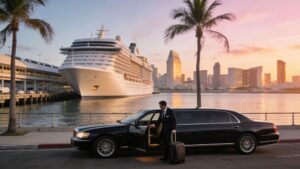
Your Guide to Transportation to Los Angeles
Figuring out the best way to get to Los Angeles can feel as tangled as the city’s infamous freeway system. The truth is, there’s no single "best" way. It all comes down to where you're starting from, what you’re willing to spend, and what you value most—speed, comfort, or cost.
This guide is designed to cut through the noise and help you find the perfect path into the City of Angels.
How to Get to Los Angeles: Choosing Your Arrival Strategy
Think about your trip to LA like a game plan. What's your top priority? Are you trying to get from Point A to Point B as fast as humanly possible? Or are you looking for a more relaxed, scenic journey? The right choice for a solo business traveler is almost certainly the wrong one for a large family on a summer vacation.
For many, flying seems like the obvious answer. Los Angeles International (LAX) is a global mega-hub, after all. But don't overlook the smaller regional airports like John Wayne (SNA) in Orange County or Long Beach (LGB). Depending on where you need to be, they can be a far more pleasant and efficient way to enter the region. We'll help you look beyond just the ticket price and consider the total cost in time and sanity.
Driving, Riding, or Flying?
Driving yourself offers freedom, but it also comes with the very real risk of soul-crushing traffic and expensive parking once you arrive. On the flip side, trains and buses are often cheaper and let you bypass the stress of the freeway. The catch? They might not get you exactly where you need to go, leaving you to solve the "last-mile" puzzle of getting from the station to your final destination.
The secret is matching the ride to your reason for traveling. A corporate executive needs a quiet, reliable space to prepare for a meeting. A wedding party needs to move together, on time. One size simply doesn't fit all in a city as sprawling as LA.
To make sense of it all, let’s break down the most common ways to get into Los Angeles. The table below gives you a quick snapshot of what to expect from each option. And if you're flying into LAX from San Diego, our LAX Pickup Guide for San Diego Travellers has specific tips just for you.
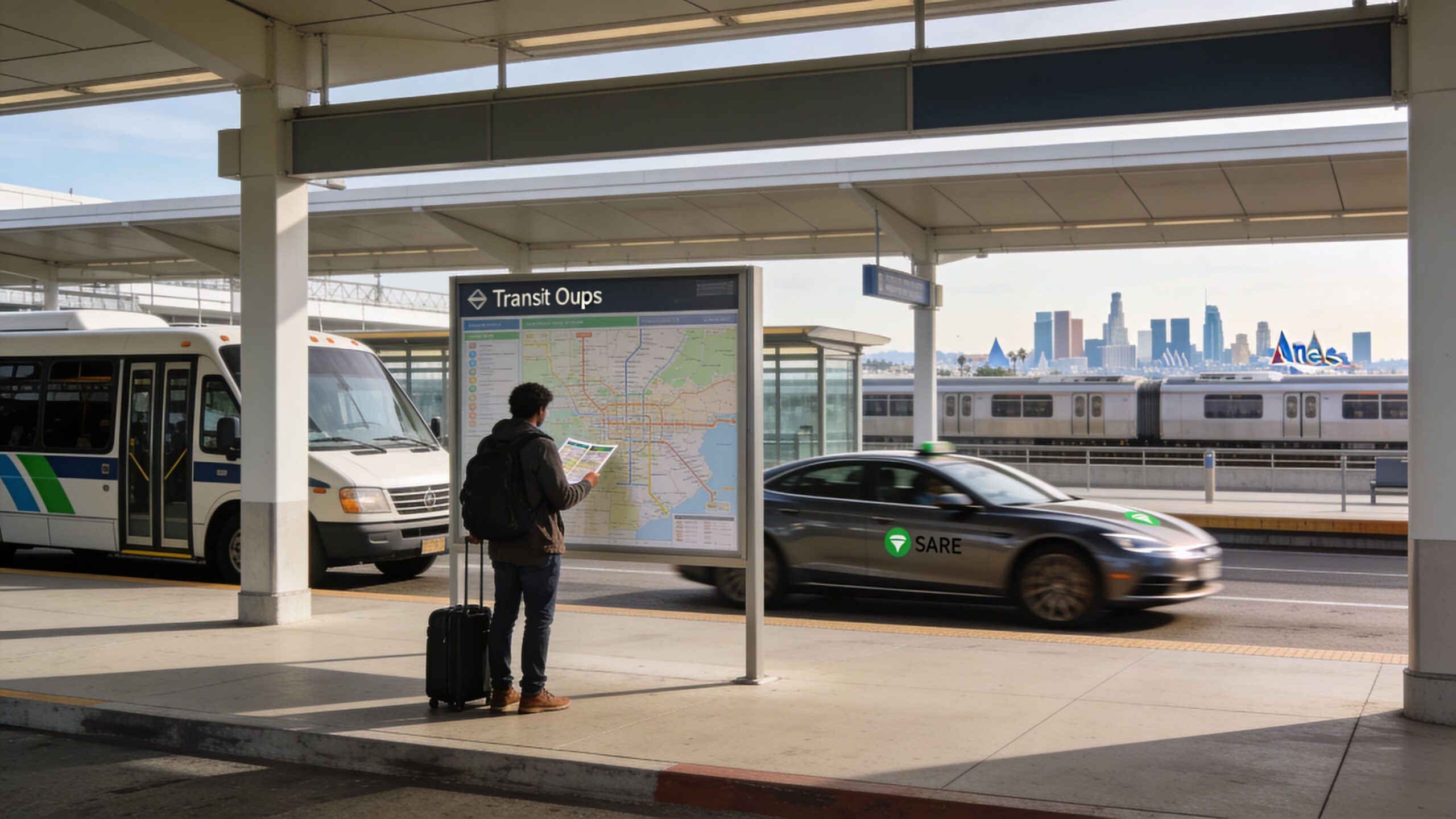
Los Angeles Transportation Options at a Glance
| Mode of Transport | Average Cost | Typical Travel Time (from San Diego) | Best For |
|---|---|---|---|
| Private Car Service | $$$$ | 2.5 – 3.5 hours | Corporate travelers, special events, and those prioritizing comfort and efficiency. |
| Driving Yourself | $$ | 3 – 5+ hours (traffic dependent) | Travelers who need a car for their entire trip and have a flexible schedule. |
| Amtrak Train | $$$ | ~3 hours + last-mile transit | Leisure travelers who enjoy scenic routes and want to avoid freeway stress. |
| Flying (to LAX) | $$ | ~4 hours (including airport time) | Travelers coming from long distances or those connecting to international flights. |
As you can see, the "fastest" option isn't always the one with the shortest travel time on paper. Now, let's dig into the details of each of these choices so you can make the right call for your trip.
Why Driving to LA Can Be Deceptively Difficult
The classic California road trip—windows down, music up, cruising into Los Angeles. It’s a great image, but the reality on the ground is often a different story. Choosing to drive your own car, a rental, or even hopping in a rideshare feels like the most direct way to get around LA. It puts you in the driver's seat, but that sense of control can vanish the moment you merge onto the freeway.
The main culprit, of course, is LA's legendary traffic. Freeways like the I-5 and I-405 aren’t just roads; they're giant, unpredictable parking lots that can completely upend your schedule. A trip that Google Maps says should take 30 minutes can easily bloat into a two-hour crawl during peak times. It’s a frustratingly common experience for anyone trying to navigate the city.
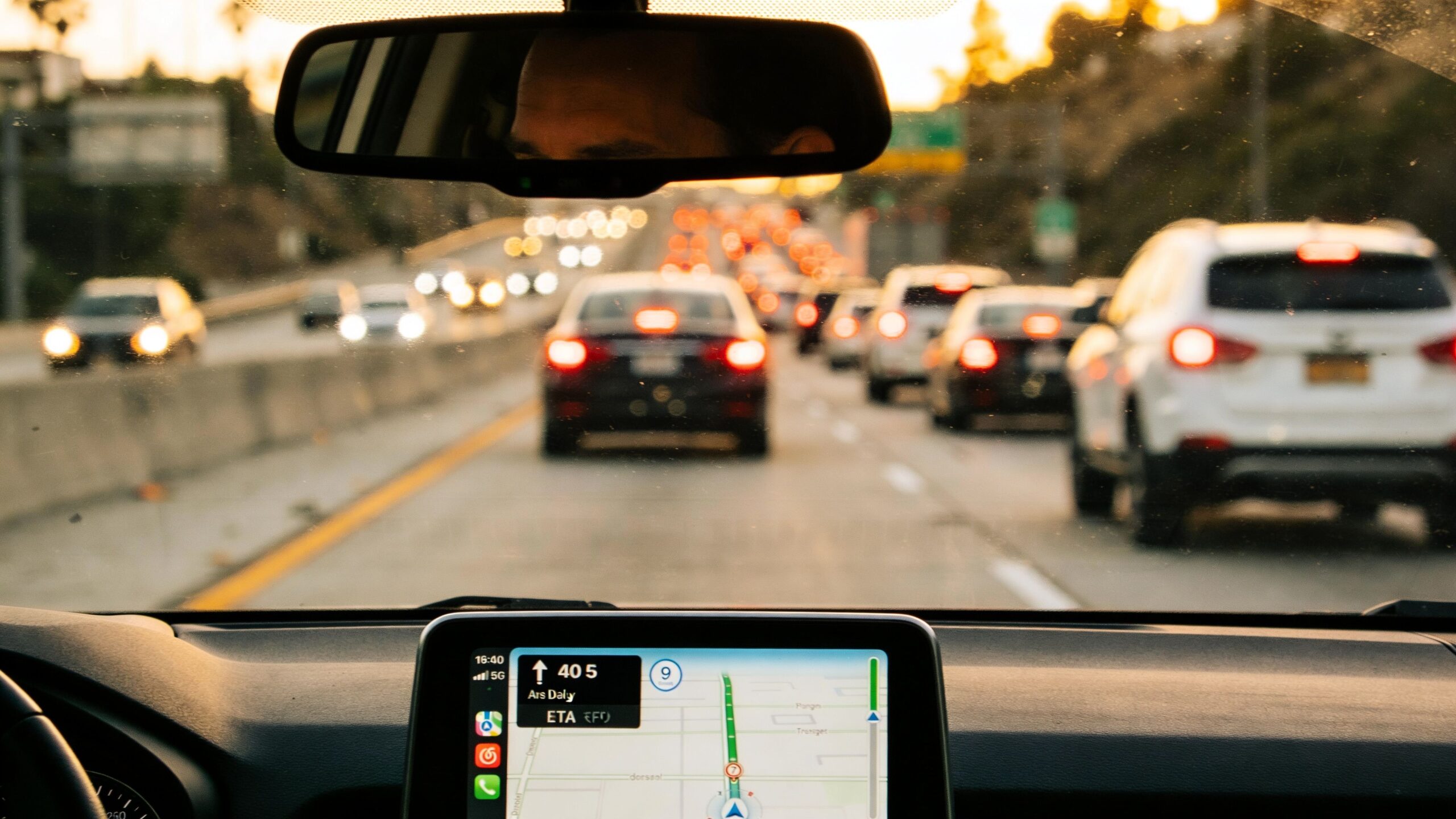
The True Cost of Driving
It isn't just the time you lose to traffic; it's the money that quietly drains from your travel budget. The sticker price of a rental car is just the beginning. Driving in LA comes with a surprising number of "hidden" costs that add up fast.
Before you decide to get behind the wheel, consider where your money is really going:
- Sticker Shock at the Parking Garage: In popular districts, expect to pay anywhere from $20 to $50 per day just to park. Heading to an event at the Crypto.com Arena or SoFi Stadium? Those rates can climb even higher.
- Pain at the Pump: California consistently has some of the highest gas prices in the country. Every mile you're stuck in traffic costs you real money.
- The Rental Car Runaround: Beyond the daily rate, you’ll be hit with taxes, insurance fees, and the time-consuming process of picking up and dropping off the vehicle.
- Rideshare Surge Surprises: Grabbing an Uber or Lyft seems like an easy fix, until surge pricing hits. That trip from LAX to Santa Monica can easily double or triple in price without warning during busy periods.
What starts as a simple plan to drive yourself often ends with you losing control over both your schedule and your wallet. It's a hard-learned lesson for many visitors.
Understanding LA's Gridlock Culture
LA’s traffic problem isn't a fluke; it's baked into the city's DNA. Los Angeles consistently ranks among the most congested cities in the world, not just the United States. This car-dependent culture turns simple commutes into grueling, multi-hour journeys.
The numbers don't lie. Back in 2019, a staggering 73% of commuters in LA drove to work by themselves, while only about 6.8% took public transit. With so many individual cars on the road, it's no wonder the average driver's time spent in traffic delays has jumped by over 13% in a single decade.
The problem is straightforward: far too many cars competing for limited space on the roads. This chronic congestion is exactly why savvy travelers and corporate clients have shifted to pre-arranged, professional car services. It takes the stress and guesswork out of the equation.
Even knowing which freeway to take is a skill. The choice between the I-5, I-405, and CA-73 toll road involves weighing different risks and potential delays. Ultimately, the constant need to watch for aggressive drivers and navigate confusing interchanges drains your energy. Instead of focusing on your business meeting or enjoying your vacation, you're just battling to get there. That mental fatigue is a real, if unquantifiable, cost of driving in LA.
Choosing the Right Southern California Airport
When you picture flying into Los Angeles, one giant airport likely dominates your thoughts: LAX. And while it’s an undeniable international gateway, assuming it's your only option is a classic rookie mistake. Southern California is actually served by a whole family of airports, each with its own unique personality and strategic advantages. Picking the right one can literally transform your trip, saving you hours of frustration on the ground.
Think of it like this: landing at the wrong airport is like showing up for a marathon ten miles behind the starting line. Sure, you can still get to the finish, but you’ve just made the race a whole lot harder than it needed to be. The smartest approach to your transportation to Los Angeles actually starts before you even book your ticket.
The LAX Equation: Global Hub vs. Ground Hassle
Los Angeles International Airport (LAX) is the region's heavyweight champion, no question. Its primary strength is its incredible connectivity. If you need to fly direct from just about anywhere in the world, LAX is almost always your answer.
But all that global access comes with a hefty price. Just getting through LAX can feel like an Olympic event, from the packed terminals and long security queues to the infamous traffic loop that traps cars, shuttles, and buses in a slow-moving crawl. Trying to coordinate a pickup or drop-off can test the patience of even the most laid-back traveler.
For many people, any time saved with a direct flight is immediately eaten up on the freeway. If your final destination is in Orange County, the San Fernando Valley, or even certain parts of LA itself, landing at LAX could easily add one to two hours of driving in soul-crushing traffic.
The Regional Champions: John Wayne and Long Beach
This is exactly where Southern California's smaller, regional airports come into play. John Wayne Airport (SNA) in Orange County and Long Beach Airport (LGB) offer a completely different—and frankly, superior—arrival experience. They are your secret weapon against LA traffic.
- John Wayne Airport (SNA): Tucked right in the heart of Orange County, SNA is an absolute dream if your business or vacation takes you to places like Irvine, Newport Beach, or Anaheim. Its smart, compact design means you can get from your gate to the curb in minutes, not hours.
- Long Beach Airport (LGB): Known for its unique open-air concourse and wonderfully manageable size, LGB is a breath of fresh air. It’s incredibly convenient for anyone heading to Long Beach, the South Bay, or northern Orange County, and the stress-free vibe is a welcome change of pace.
Choosing one of these airports is more than just avoiding crowds; it’s a strategic decision. You're positioning yourself much closer to your actual destination, effectively bypassing the worst of LA's central gridlock. To really nail this strategy, you need reliable transport ready to go. You can learn more about how a luxury Los Angeles airport transportation service completes this seamless travel plan.
Making the Right Airport Choice
So, how do you pick the right one? It really comes down to asking a few simple questions before you click "purchase" on that flight. First, pull up a map and check the actual driving distance from each airport to your hotel or first appointment.
Next, do a quick mental calculation of the total travel time. A direct flight into LAX followed by a two-hour car ride is probably not more efficient than a flight with one quick layover into SNA that leaves you with just a 20-minute drive.
The best airport for your trip is simply the one that keeps you off the freeways the longest. Your goal is to spend more time enjoying your destination, not staring at brake lights.
If you're traveling with a furry companion, your decision might also be influenced by airline policies. It's always a good idea to research which airlines allow pets in the cabin ahead of time. Lastly, don't forget to factor in the "hassle cost"—the sheer ease and speed of getting through a smaller airport like SNA or LGB often outweigh any small benefit of flying into the LAX mega-hub.
Using Rail and Public Transit to Get to LA
Los Angeles is notorious for its car culture, but don't let that fool you—arriving by train has a certain classic appeal. For anyone traveling from nearby Southern California cities, hopping on a train can be a surprisingly smart way to dodge freeway gridlock, offering a calmer, more scenic entry into the city.
The two main rail services you'll encounter are Amtrak and Metrolink. They both connect the sprawling suburbs and surrounding counties to LA's historic Union Station, but they serve very different needs. Getting a handle on what each one does best is the first step in deciding if the train is the right move for your trip.
Evaluating Your Rail Options
Amtrak’s Pacific Surfliner is the star of the show for longer hauls, especially if you're coming up from San Diego. It's built for comfort, with spacious seating and absolutely stunning ocean views for a good chunk of the ride. Think of it as the scenic long-distance cruiser, designed for a more relaxed journey.
Metrolink, on the other hand, is the region's workhorse. It's a true commuter rail, linking communities across Los Angeles, Orange, Riverside, San Bernardino, and Ventura counties. Its schedule is built around the 9-to-5 crowd, so you’ll find the most frequent service during weekday rush hours.
The rebirth of rail in Los Angeles since 1990 is a fascinating story in the city's transportation history, yet ridership data shows why premium ground services are still so critical. LA Metro Rail started with the Blue Line in 1990 and has since grown to over 100 miles, while the Metrolink commuter network covers more than 550 one-way route miles. Even with that investment, by 2019, 76% of commutes were still made by car, highlighting the ongoing demand for reliable private transport for time-sensitive travel. You can find more details on LA’s transit evolution by exploring the history of transportation in Greater Los Angeles.
So, how do you choose? It really comes down to where you're starting and when you're traveling. Coming from San Diego for a weekend getaway? The Pacific Surfliner is your ticket. Commuting from an Inland Empire suburb for a Tuesday morning meeting? Metrolink is probably your most practical bet.
The Unavoidable Last-Mile Problem
Pulling into the grand, historic Union Station feels like a victory, but your journey isn't quite over. Now you’re faced with what transportation experts call the "last-mile problem"—how do you get from the station to your actual destination? A train drops you at a central hub, but unlike a door-to-door car service, the rest is up to you.
This final leg of the trip can be a real headache, especially for certain types of travelers.
- Business Travelers: The last thing you want before a big meeting is to be fumbling with luggage on the subway or trying to hail a cab in a new city. It's inefficient and adds a layer of unnecessary stress.
- Families with Children: Trying to herd kids, strollers, and bags onto a crowded bus or metro train can turn a pleasant family trip into a nightmare in a heartbeat.
- Visitors with Heavy Luggage: Let's be honest, dragging multiple suitcases on and off public transit is hardly anyone's idea of a good time. It’s simply not practical for most visitors.
This is the fundamental trade-off. You might have dodged the stress of driving on the freeway, but now you have a new logistical puzzle to solve: navigating a massive city with all your belongings. For a more direct and seamless alternative, take a look at our guide on service between San Diego and Los Angeles.
In the end, while taking the train to Los Angeles is a solid and often enjoyable option, it just doesn't deliver on end-to-end convenience. The comfort of the train ride can easily be undone by the hassle of completing the journey. For anyone who puts a high value on efficiency and true door-to-door comfort, a pre-arranged private car is still the best way to go.
The Best LA Transportation for Your Travel Style
Finding the right way to get around Los Angeles isn't about some single "best" option. The perfect ride for a business traveler is a terrible choice for a bachelorette party, and what works for a family of five won't suit a solo adventurer.
The real secret is matching the transportation to your trip's specific demands. Let's break down the most common travel styles to figure out which LA transport solution makes the most sense for you.
For the Corporate Executive
If you're traveling for business, your time is your most valuable currency. Every minute you spend wrestling with LA traffic, hunting for a parking spot, or waiting on a rideshare curb is a minute you’re not closing a deal or prepping for a big meeting.
This is exactly why a professional car service with a chauffeured sedan or luxury SUV is the gold standard for corporate travel. It effectively turns dead travel time into productive work time. Picture this: you step off your flight, bypass the chaos, and slide into a quiet, private vehicle that’s already connected to Wi-Fi. You can immediately start taking calls, firing off emails, or just gathering your thoughts before you walk into your next meeting.
In a city famous for its unpredictability, a professional car service offers a bubble of control and calm. Your driver worries about the traffic and the route, leaving you completely free to focus on your business.
For any executive, the advantages are crystal clear:
- Punctuality and Reliability: A great service tracks your flight and adjusts for delays in real-time. Your driver is waiting when you land—no exceptions.
- Productivity on the Go: The car becomes a mobile office, complete with a quiet environment, charging ports, and Wi-Fi.
- Professional Image: Pulling up in a polished, chauffeured vehicle sends a powerful message about your professionalism and attention to detail.
For Wedding Parties and Special Events
A wedding day or any other major celebration is all about flawless moments. The last thing anyone needs is the stress of transportation logistics causing delays or fraying nerves. Trying to coordinate multiple cars for a wedding party, figure out convoluted parking, and make sure everyone gets to the venue together on time is a recipe for disaster.
This is where an elegant group vehicle, like a Mercedes Sprinter van or a mini-coach, is non-negotiable. It’s not just about getting from point A to point B; it’s about keeping the celebratory atmosphere alive. A dedicated vehicle keeps your entire group together, so the party never has to stop between the hotel, the ceremony, and the reception.
This approach ensures everyone arrives safely and in style, without the headache of anyone getting lost or fighting for a parking space. This same logic applies to airport runs, as you can see in these top reasons a car service is the best choice for LAX transfers.
For Large Groups and Conference Attendees
When you're responsible for moving a large group for a conference or corporate summit, your main goals are efficiency and scale. Attempting to wrangle a fleet of separate rideshares or asking dozens of attendees to navigate LA’s public transit on their own will only lead to chaos, missed sessions, and immense frustration.
A spacious mini-coach or a full-blown charter bus is the obvious and most cost-effective solution here. It centralizes all transportation, putting everyone on the same schedule and the same page. For event planners, this drastically simplifies logistics. For attendees, it creates a much better experience, giving them a chance to network or simply relax on the way. No one gets left behind, and your event's timeline stays perfectly on track from the very first pickup.
The Smartest Way to Handle Your LA Arrival
So, you’ve weighed the options. You’ve looked at the traffic maps, the cost calculators, and the sheer hassle of it all. What’s the secret to a genuinely stress-free trip to Los Angeles? It’s not a magic app or a hidden freeway entrance. The real answer is much simpler: let a professional handle it.
Booking a pre-arranged chauffeured car service is the single best way to sidestep the entire transportation headache. Think about it. Instead of wrestling your luggage to a crowded rideshare curb at LAX, you get a text from your driver who’s already waiting. They greet you, take your bags, and get you settled into a cool, quiet vehicle while everyone else is still figuring out where to go.
You’re already on your way, relaxing or catching up on emails with onboard Wi-Fi, while others are just beginning their fight with the 405. Your driver is a local pro who knows the city’s pulse and how to navigate it. This is how you start your LA trip on the right foot, with zero friction.
Why a Premium Service Makes All the Difference
Of course, not all car services are the same. A truly great one feels less like a ride and more like your personal logistics coordinator. The value is in the details—the thoughtful features that guarantee you won't have to worry about a thing from the moment you land.
Here’s what sets a top-tier service apart:
- Real-Time Flight Tracking: The service watches your flight in real-time. If you’re early or delayed, your driver knows and adjusts the pickup automatically. No frantic calls or texts needed from you.
- 24/7 Dispatch and Support: Last-minute change of plans? A good service has a human on the line, day or night, ready to help you adjust your booking.
- Guaranteed Punctuality: The best companies stand by their promise to be on time, every time. It’s a guarantee that gives you total peace of mind.
- Productivity on the Move: With complimentary Wi-Fi and charging ports, the car becomes your mobile office. That travel time is no longer lost; it’s reclaimed.
This infographic helps visualize how different transportation methods stack up for various traveler types.
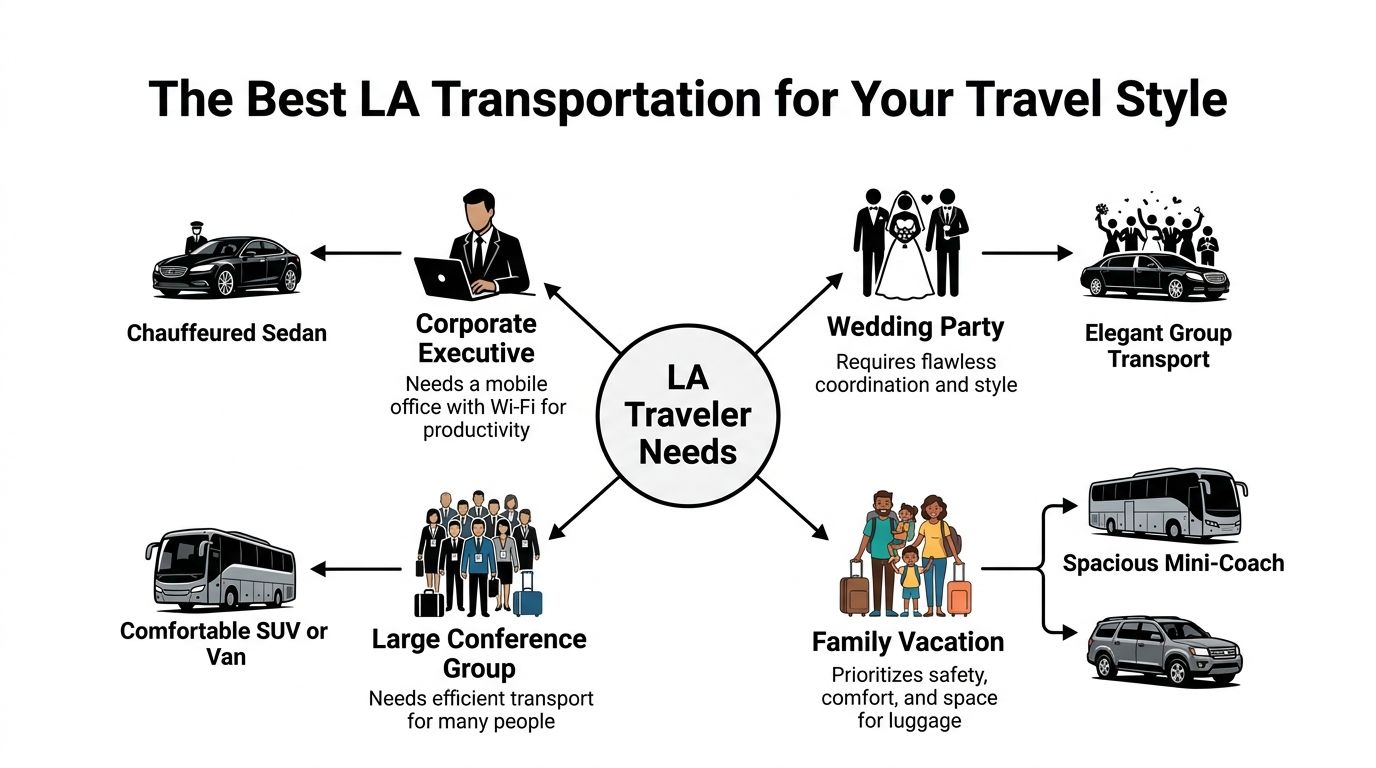
As you can see, a chauffeured service isn't just for one type of trip; it’s a flexible solution that works just as well for executives as it does for families or wedding parties.
Beating LA’s Legendary Gridlock
Choosing a professional driver is a strategic decision to opt out of LA's infamous car culture. The city’s history explains why it's so challenging. After World War II, Los Angeles systematically dismantled its vast streetcar system—the last Red Car ran in 1961. This decision locked the region into a deep dependency on automobiles.
The numbers tell the story. By 2019, a staggering 76.0% of Angelenos commuted to work by driving alone. That car-first reality is why LA has the most congested urban area in the United States. It's also why a service like Rides On Time Transportation, which uses flight tracking and FasTrak access to navigate efficiently, is so valuable. To learn more about this history, check out this deep dive into Southern California's transportation milestones.
At the end of the day, hiring a professional car service means you're buying back your time and sanity. It's the one choice that puts you in control, no matter what the LA freeways decide to do.
Your Top Questions About Getting Around Los Angeles, Answered
Planning your LA trip brings up a few practical questions, even for seasoned travelers. Let's tackle two of the most common ones we hear: navigating the infamous traffic and picking the right ride for your group.
What’s the Best Time to Travel to Avoid LA Traffic?
Ah, the million-dollar question. While there’s no secret password to make traffic disappear, you can definitely outsmart it. The windows to avoid are the weekday rush hours, which are roughly 7:00 AM to 10:00 AM and a long afternoon slog from 3:00 PM to 7:00 PM.
Don't assume weekends are a free-for-all, either. Saturday afternoons can get surprisingly congested with shoppers and event-goers, and Sunday evenings are notorious for the "great return home." Your safest bet for a smooth ride is often mid-day on a weekday (between 10:00 AM and 2:00 PM) or traveling very early in the morning before the city truly wakes up.
How Do I Choose the Right Vehicle Size for My Group?
Picking the right vehicle is all about balancing your headcount with your luggage. It's a simple calculation that makes a world of difference for comfort.
- Sedans: Perfect for 1-3 people with carry-ons or a couple of suitcases. Think corporate travelers or a couple's getaway.
- SUVs: The best choice for up to 6 passengers, or for smaller groups who packed a little extra. They give you that much-needed legroom and cargo space.
- Sprinter Vans: When you have a medium-sized crew of 8-14, this is your answer. It's the go-to for wedding parties, corporate teams, and family reunions who want to stick together.
- Mini-Coaches: For large groups of 20+, a mini-coach is essential. It ensures everyone for your conference or big event arrives on time and in one place.
Here's a pro tip: Always book a vehicle that can comfortably handle both your passengers and their luggage. Trying to squeeze into a car that's too small is a classic mistake that guarantees a cramped, stressful start to your trip.
By thinking through these details, you can make sure your arrival in Los Angeles is just as relaxing as the trip itself.
Ready to skip the guesswork entirely? The experts at Rides On Time Transportation have a fleet of professional, chauffeured vehicles ready for all your Southern California travel. Book your stress-free ride and let us handle the logistics.